
Coffee Grade
Coffee Grade AA
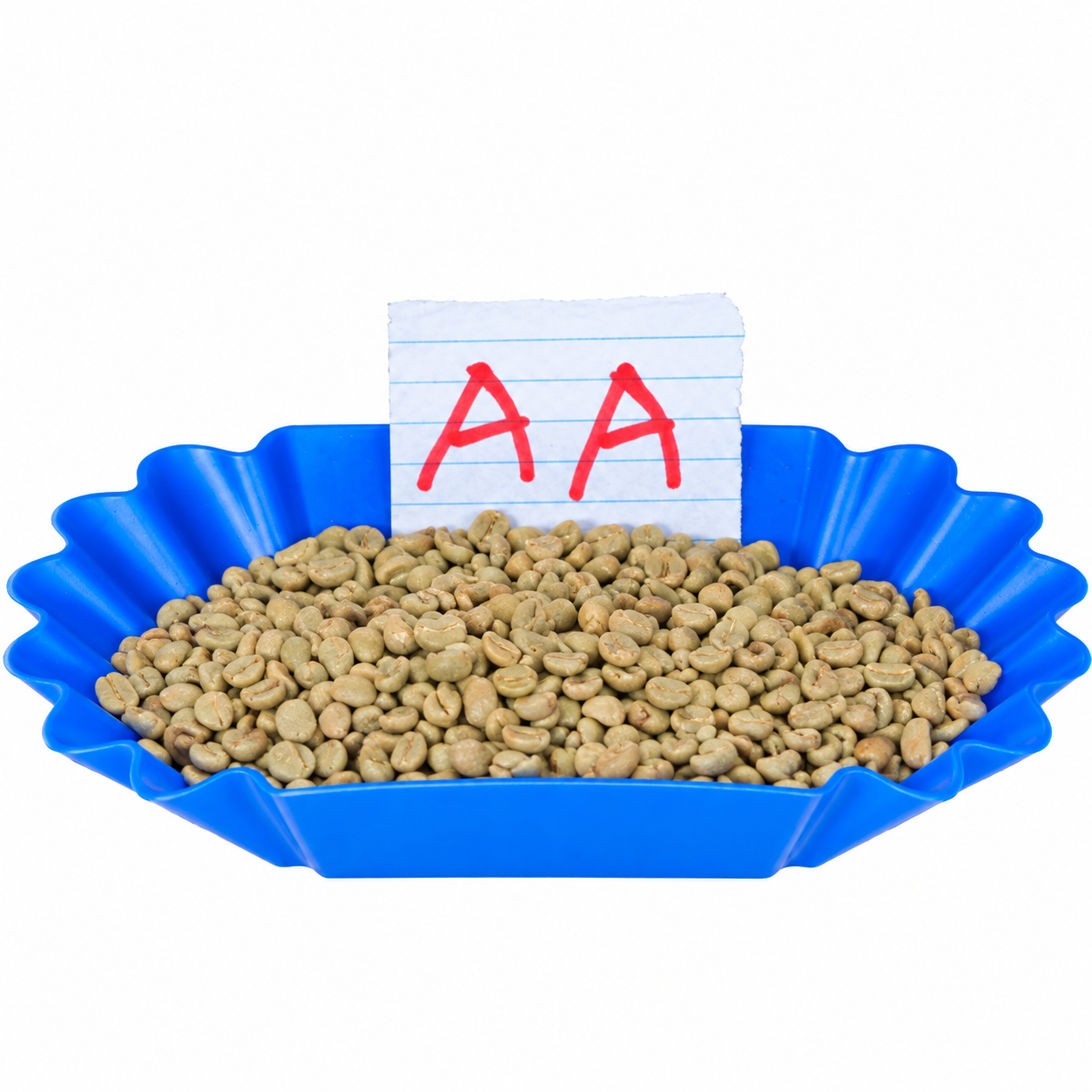
Coffee Grade AA represents one of the highest tiers of green coffee beans available on the global market, particularly within iconic origin regions like Kenya and East Africa. Classified by physical screen size, Grade AA beans pass through a Screen 18 mesh (retained at 7.14 millimeters), ensuring they are the largest and most uniform in any given harvest. Because larger, fully developed coffee cherries absorb more nutrients from the coffee tree during growth, Grade AA beans consistently deliver an exceptional cup profile characterized by bright, complex acidity, a full body, and distinct fruity or floral notes. Due to their strict sizing, exceptional physical presentation, and rich flavor complexity, Grade AA coffees command top bidding prices at regional coffee auctions and remain the premier choice for specialty roasters, coffee importers, and discerning connoisseurs worldwide seeking uncompromised origin characteristics.
Products
7
Regions
3
Positioning
Premium Quality
Coffee Grade
Coffee Grade AA
Coffee Grade AA represents one of the highest tiers of green coffee beans available on the global market, particularly within iconic origin regions like Kenya and East Africa. Classified by physical screen size, Grade AA beans pass through a Screen 18 mesh (retained at 7.14 millimeters), ensuring they are the largest and most uniform in any given harvest. Because larger, fully developed coffee cherries absorb more nutrients from the coffee tree during growth, Grade AA beans consistently deliver an exceptional cup profile characterized by bright, complex acidity, a full body, and distinct fruity or floral notes. Due to their strict sizing, exceptional physical presentation, and rich flavor complexity, Grade AA coffees command top bidding prices at regional coffee auctions and remain the premier choice for specialty roasters, coffee importers, and discerning connoisseurs worldwide seeking uncompromised origin characteristics.
Grade Story
Coffee Grade AA stands at the pinnacle of physical grading standards in the global specialty coffee trade. Originating primarily from prestigious growing regions in East Africa—most notably Kenya, Tanzania, and Uganda—this grading system classifies green coffee beans based on physical size, density, and structural integrity. In raw coffee processing, physical size correlates strongly with density and maturity; larger beans typically reflect a longer ripening phase on the coffee tree, allowing the seed to absorb rich sugars, organic acids, and essential nutrients. As a result, Grade AA represents not only physical grandeur but also a high baseline for cup quality and flavor complexity.
Physical Characteristics and Screen Sizing
The defining technical benchmark of Grade AA coffee is its physical size, measured using a precise screen sorting system. Grade AA beans are defined as Screen 18, meaning they pass through perforations measured at 18/64ths of an inch (approximately 7.14 millimeters) and are retained above Screen 17. The physical uniformity achieved through mechanical screen sorting ensures even heat transfer during the roasting process. When coffee roasters work with Screen 18 beans, thermal conductivity remains consistent across the entire batch, preventing outer scorching and ensuring predictable caramelization of natural sugars. To explore official classification frameworks, you can review the physical grading standards published by the Specialty Coffee Association (SCA).
The Sensory Profile of Grade AA
In the cup, Grade AA coffee is renowned for delivering an intense, vibrant sensory experience. While specific tasting notes vary depending on terroir, soil composition, elevation, and post-harvest processing methods (such as double-washed or natural processing), Grade AA beans share distinct classic characteristics:
-
Vibrant Acidity: Frequently showcasing sparkling citric, malic, or phosphoric acidity reminiscent of blackcurrant, winey notes, or crisp citrus fruits.
-
Complex Flavor Spectrum: Layers of rich dark berries, stone fruits, cane sugar sweetness, and delicate floral aromas.
-
Full Body and Finish: A heavy, velvety mouthfeel accompanied by a long, clean, and lingering sweet finish.
These complex profiles are heavily amplified when beans are cultivated at high altitudes—often exceeding 1,500 to 2,100 meters above sea level—where cooler temperatures slow down cherry maturation. Importers and specialty roasters monitor harvest reports and quality benchmarks published by international trade bodies such as the International Coffee Organization (ICO) to track grade availability and auction trends.
Auction Dynamics and Commercial Value
Because Grade AA beans represent a smaller percentage of a total farm yield—typically 15% to 25% of a high-altitude harvest—their scarcity drives intense competition at centralized trade platforms, such as the Nairobi Coffee Exchange. At auction, Grade AA lots consistently fetch premium prices over smaller screen sizes like Grade AB or Grade C.
For producers and specialty cooperatives, achieving a high yield of Grade AA green coffee requires meticulous agronomy, hand-picking only fully ripe cherries, precise wet-milling, and sun-drying on raised African beds. For specialty coffee exporters, Grade AA serves as the flagship product that opens doors to elite international markets across Europe, North America, and East Asia, where consumers willingly pay a premium for uncompromised origin quality.
Products
Products Under This Grade
Connect the grade standard directly to live products so buyers can move from qualification to action without friction.
Eastern Region
Embu Arabica AA
USD 8.90
Open product details and inquiry options.
Kenya Rift Valley Coffee
Kericho Arabica AA
USD 8.90
Open product details and inquiry options.
Central Region
Kiambu Arabica AA
USD 9.40
Open product details and inquiry options.
Central Region
Kirinyaga Arabica AA
USD 9.20
Open product details and inquiry options.
Eastern Region
Meru Arabica AA
USD 9.20
Open product details and inquiry options.
Central Region
Murang'a Arabica AA
USD 8.90
Open product details and inquiry options.
Central Region
Nyeri Arabica AA
USD 9.40
Open product details and inquiry options.
FAQs
Use FAQs to answer qualification questions early and reduce hesitation before inquiry.
What does "Screen 18" mean in Coffee Grade AA?
Screen 18 is a mechanical sizing measurement used during green coffee sorting. It corresponds to perforations measuring 18/64ths of an inch (7.14 mm). Beans graded as AA are retained above this screen size, making them the largest physical beans in a standard harvest classification.
Is Grade AA always better in flavor than Grade AB?
While Grade AA beans are larger and often command higher market prices, size alone does not guarantee a superior flavor profile. Grade AA beans usually benefit from full maturity on the branch, but cup quality also depends heavily on farming practices, processing methods, and roasting. High-quality Grade AB beans can sometimes match or exceed a Grade AA in cupping scores.
Which countries primarily use the Grade AA classification?
The letter-grading system (AA, AB, PB, C) is most prominently used in East African coffee-producing countries, including Kenya, Tanzania, Uganda, and Malawi. Other regions, such as Central and South America, tend to use different classification terms like SHB (Strictly Hard Bean) or Supremo.
Why does Coffee Grade AA command higher auction prices?
Grade AA commands a premium because Screen 18 beans represent a smaller, select fraction of the total crop. Their physical uniformity allows for consistent roasting, and their full cherry development generally translates into exceptional cup clarity, high acidity, and complex flavors that specialty buyers demand.
How should coffee roasters adjust their profile for Grade AA green beans?
Because Grade AA beans are large and dense, they require a well-managed charge temperature and careful heat application during early roasting phase to ensure thermal energy penetrates to the center of the bean without scorching the surface.