
Coffee Grade
Coffee Grade T
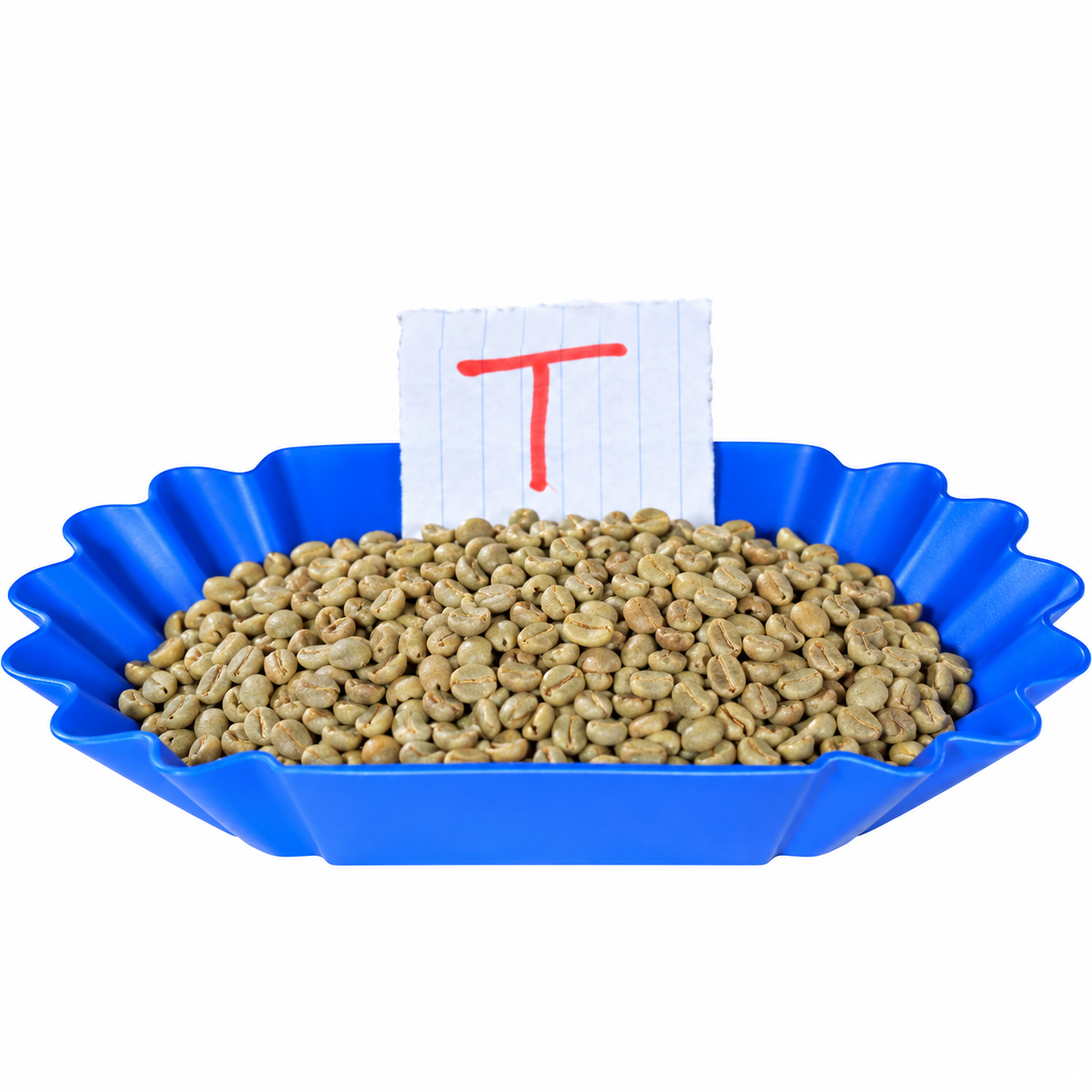
Coffee Grade T represents the smallest and lightest physical category of washed green coffee beans separated during the dry milling process. Falling into the lowest tier of screen sizes (typically Screen 12 and below) combined with low cellular density, Grade T consists of small seeds, fragments, and lightweight coffee beans removed from primary export lots.
Products
0
Regions
0
Positioning
Premium Quality
Coffee Grade
Coffee Grade T
Coffee Grade T represents the smallest and lightest physical category of washed green coffee beans separated during the dry milling process. Falling into the lowest tier of screen sizes (typically Screen 12 and below) combined with low cellular density, Grade T consists of small seeds, fragments, and lightweight coffee beans removed from primary export lots.
Grade Story
Because density and size are closely tied to cherry maturation and nutrient accumulation, Grade T beans deliver a soft, light-bodied cup with gentle acidity and mild flavor notes. Despite its humble physical footprint, Grade T undergoes thorough gravity sorting to ensure it remains clean and free from harsh off-flavors. This makes Grade T an exceptionally economical option for commercial roasters, budget-friendly coffee formulations, local consumption markets, and instant coffee processing worldwide.
In the structured hierarchy of green coffee milling, Coffee Grade T plays an essential role in sorting efficiency and crop utilization. Originating in East African coffee classification systems—such as those used in Kenya, Tanzania, and Uganda—Grade T sits at the lower boundary of sound green coffee beans. It represents the combination of small physical screen size and light cellular weight, gathering small coffee seeds that fall below standard commercial screen sizes.
By systematically removing Grade T from higher-tier classifications like Grade C and Grade TT, coffee mills preserve the physical uniformity and roast predictability of export-grade lots while converting every portion of the harvest into a viable, market-ready product.
Milling Mechanics and Separation Standards
The separation of Grade T occurs at the final stages of dry milling through a combination of mechanical sieving and pneumatic airflow separation. Green coffee beans are passed over vibrating screen sieves where small seeds drop through perforations measuring Screen 12 (12/64ths of an inch or ~4.76 mm) down to Screen 8.
Simultaneously, density channels and gravity tables pass air currents through the falling coffee stream. The lightest beans, small broken bean tips, and thin outer seeds are lifted by the air currents and directed into the Grade T channel (where "T" historically denotes "Thin" or "Triage" fraction). Because dry mills utilize optical color sorters alongside density tables, black beans, stones, and heavy foreign debris are excluded, ensuring the final Grade T lot maintains clean physical purity. To understand standard green coffee physical classification, grading rules, and defect thresholds, importers can review guidelines published by the Specialty Coffee Association (SCA).
Sensory Profile and Cupping Dynamics
Because Grade T beans are smaller and possess lower cellular density, their chemistry differs from dense, high-altitude primary lots. During roasting and cupping, Grade T exhibits a straightforward, approachable sensory profile:
-
Gentle, Soft Acidity: Mild citric notes that lack the sharp intensity of higher grades, producing a smooth, non-aggressive cup.
-
Light Body: A clean, delicate, and tea-like mouthfeel.
-
Mild Flavor Spectrum: Simple notes of roasted grain, light nuttiness, soft cocoa, and subtle caramel sweetness.
-
Clean Overall Cup: Free from foul fermented or phenolic notes when harvested from clean, fully washed processing channels.
Global coffee production statistics, grade distribution ratios, and export market conditions are regularly updated by international trade organizations like the International Coffee Organization (ICO).
Commercial Purpose and Market Applications
At regional coffee trade centers, including the Nairobi Coffee Exchange, Grade T is offered at significant price discounts compared to Screen 16–18 grades. This accessible price point creates distinct market applications:
-
High-Volume Commercial Blends: Commercial roasters use Grade T as a budget-friendly filler in ground retail coffees and institutional food-service blends.
-
Instant and Soluble Coffee Production: Because of its low cost and quick extraction characteristics, Grade T is widely purchased by soluble coffee manufacturers.
-
Domestic and Regional Markets: Grade T forms a core supply line for local roasting houses, street vendors, and domestic coffee consumption across coffee-producing countries.
By separating small and light coffee seeds into a dedicated category, Coffee Grade T ensures zero waste at the mill level while offering cost-conscious coffee buyers a clean, functional product.
Products
Products Under This Grade
Connect the grade standard directly to live products so buyers can move from qualification to action without friction.
No products linked yet.
FAQs
Use FAQs to answer qualification questions early and reduce hesitation before inquiry.
What does "Grade T" stand for in coffee classification?
In East African green coffee grading systems, Grade T refers to small, light, or thin green coffee beans (typically Screen 12 and below) that have been separated from larger and denser primary grades during dry milling.
Is Grade T coffee considered defective?
No. While Grade T consists of small and lightweight seeds, it is not classified as defective coffee. Mill sorting ensures that stones, husk, and black or sour beans are removed, leaving a clean lot of small, usable green coffee.
How does Grade T taste compared to Grade AA or AB?
Grade T produces a much lighter body, softer acidity, and simpler flavor profile compared to the complex, heavy-bodied, and vibrant fruit notes found in Grade AA or AB coffees.
Why do roasters buy Grade T green coffee?
Grade T is highly affordable and provides clean coffee flavor. Commercial roasters use it to manage production costs in high-volume retail blends, filter coffee packages, and soluble (instant) coffee manufacturing.
How should coffee roasters adjust their profile for Grade T green coffee?
Because Grade T beans are small and less dense, they transfer heat very rapidly. Roasters should use a low charge temperature and gentle heat application to prevent surface scorching or uneven roasting.