
Coffee Grade
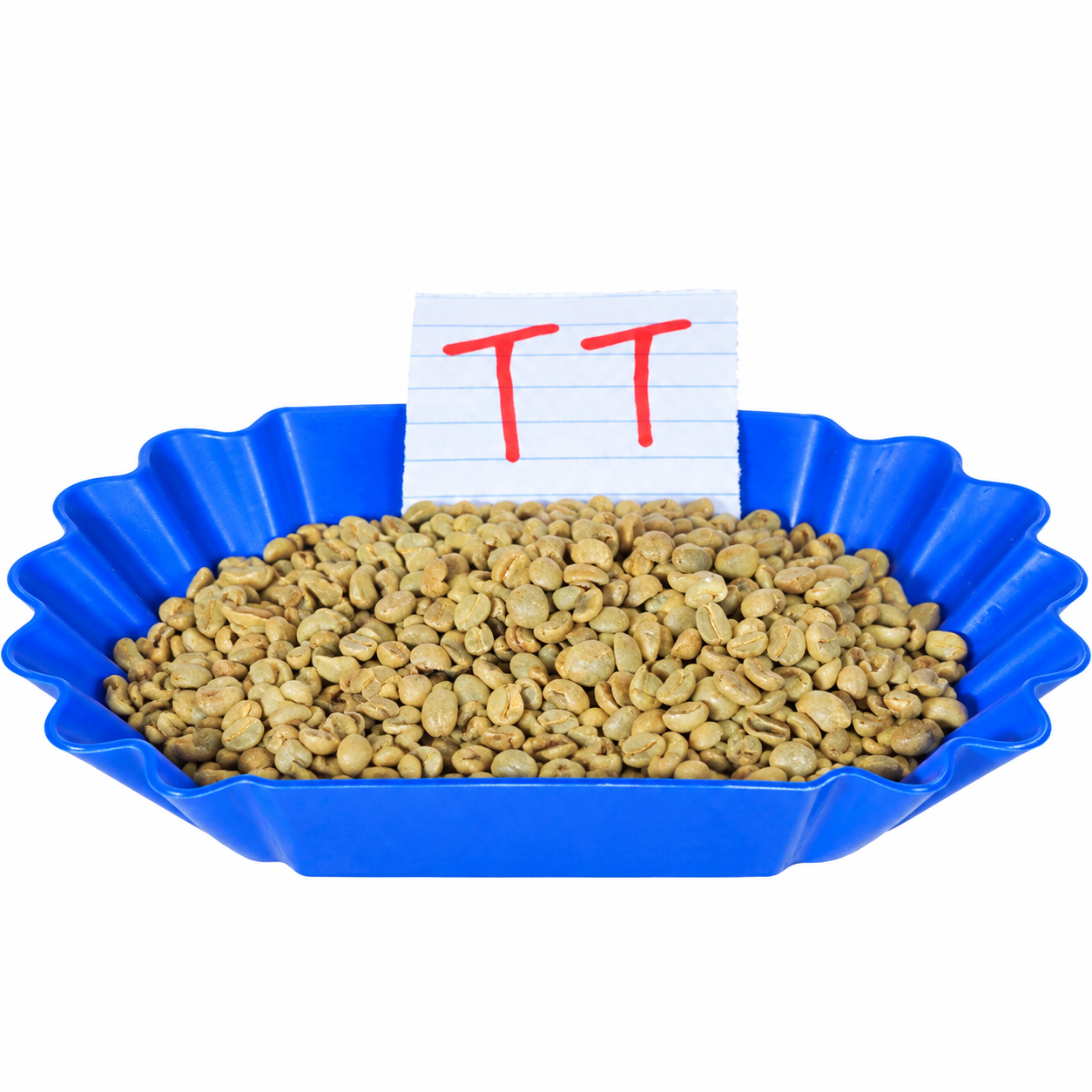
Coffee Grade TT
Coffee Grade TT consists of lighter-density green coffee beans that are mechanically separated from primary grades like Grade AA and Grade AB during dry mill processing. Utilizing pneumatic air separators and density tables, mills pass air currents through the green coffee stream; lighter, less dense beans are blown upward and grouped as Grade TT.
Products
0
Regions
0
Positioning
Premium Quality
Coffee Grade
Coffee Grade TT
Coffee Grade TT consists of lighter-density green coffee beans that are mechanically separated from primary grades like Grade AA and Grade AB during dry mill processing. Utilizing pneumatic air separators and density tables, mills pass air currents through the green coffee stream; lighter, less dense beans are blown upward and grouped as Grade TT.
Grade Story
While these beans share identical screen dimensions with heavy, premium lots, their lower physical density indicates a slightly accelerated ripening process or lower nutrient accumulation on the tree. As a result, Grade TT delivers a lighter, softer cup profile with mild acidity and gentle body. Free from defect-driven foul off-flavors, Grade TT offers an exceptionally clean, cost-effective green coffee option. It serves as an indispensable workhorse for high-volume commercial roasters, budget-conscious market sectors, and balanced espresso blend formulations.
Coffee Grade TT holds a crucial functional position in dry mill operations and commercial coffee trading. In traditional East African coffee grading systems—such as those established in Kenya, Tanzania, and Uganda—green coffee is classified not only by physical dimensions (screen sizing) but also by physical density and weight. Grade TT represents the lighter-density fraction of large-to-medium screen coffee beans that are separated from premium heavy-weight fractions like Grade AA and Grade AB.
Density Separation Mechanisms and Milling Science
During dry milling, washed green coffee passes through mechanical screen sorters to separate beans by physical size. However, size alone does not determine coffee quality; physical density is equally critical. To separate dense beans from light beans, dry mills use pneumatic air sorters and gravity channels.
During this process, air currents are blown through the flowing stream of green coffee. Heavier, dense beans—which matured slowly at high altitudes and accumulated dense sugar structures—fall through the airflow into primary channels (Grade AA or AB). Lighter beans, which possess lower mass relative to their surface area, are swept upward by the air currents. These lighter beans are collected separately and designated as Grade TT (often paired alongside Grade T, which represents the lighter-density fraction of smaller screen sizes).
Because Grade TT beans are physically intact and clean, they are distinct from defective or broken beans. To understand physical grading criteria, density separation principles, and defect thresholds, roasters can consult green coffee standards defined by the Specialty Coffee Association (SCA).
Sensory Profile and Cupping Characteristics
Because Grade TT beans have lower physical density, their cellular structure is less compact than that of top-tier auction lots. When cupped by sensory professionals, Grade TT green coffee yields a delicate, approachable sensory profile:
-
Milder, Soft Acidity: Gentle citric and malic acidity that lacks the sharp, winey intensity of Grade AA, providing a smooth drinking experience.
-
Lighter Body: A clean, light-to-medium mouthfeel with subtle tea-like qualities.
-
Balanced Flavor Spectrum: Pleasant notes of toasted cereal, light cocoa, mild nuts, and subtle cane sugar sweetness.
-
Clean Cup Clarity: Free from primary processing defects, ensuring a uniform taste free from astringent or ferment off-notes.
Global market distributions, export statistics, and grade ratios across producing origins are regularly monitored and published by international trade bodies like the International Coffee Organization (ICO).
Commercial Applications and Market Dynamics
At regional trading platforms, such as the Nairobi Coffee Exchange, Grade TT lots are auctioned at accessible, discounted price points compared to dense, heavy-weight grades. This favorable cost structure makes Grade TT highly desirable for specific commercial strategies:
-
Commercial Drip Blends: Grade TT provides a clean, neutral, and cost-effective foundation for retail bag blends, canned coffees, and food-service drip offerings.
-
Espresso Volume Optimization: Roasters use Grade TT to adjust margins in multi-origin espresso blends without introducing defective flavors or harsh bitterness.
-
Secondary and Domestic Markets: Grade TT serves as a vital supply line for regional roasting operations, institutional buyers, and emerging domestic consumption markets across coffee-producing nations.
By capturing clean, usable coffee seeds that would otherwise dilute the density uniformity of primary export grades, Coffee Grade TT preserves the integrity of top-tier lots while delivering tremendous economic value to commercial coffee buyers worldwide.
Products
Products Under This Grade
Connect the grade standard directly to live products so buyers can move from qualification to action without friction.
No products linked yet.
FAQs
Use FAQs to answer qualification questions early and reduce hesitation before inquiry.
What does "TT" mean in coffee grading?
In East African green coffee grading systems, Grade TT designates lighter-density coffee beans that have been separated from heavy, dense primary lots (like AA or AB) using air-density separators during dry milling.
How are Grade TT beans separated from Grade AA or AB beans?
Grade TT beans are separated using pneumatic air sorters or gravity tables. Air currents blow through the coffee stream, lifting lighter-density beans upward into the TT classification while allowing denser, heavier beans to fall into primary grade channels.
Is Grade TT coffee defective or low quality?
No. Grade TT beans are clean, intact green coffee beans. They simply have lower cellular density than Grade AA or AB beans. While they yield a lighter body and milder acidity, they are free from processing defects and offer clean, pleasant flavors.
Why do coffee roasters use Grade TT green coffee?
Commercial roasters favor Grade TT because it offers clean origin characteristics at a lower price than dense auction grades. It serves as an ideal, cost-effective base for high-volume retail blends, instant coffee production, and commercial espresso recipes.
How should roasters adjust their roasting profile for Grade TT?
Because Grade TT beans are less dense, they transfer heat quickly and possess a delicate cellular structure. Roasters should use a lower initial charge temperature and moderate heat application during the drying phase to prevent scorching or premature cracking.