
Kenyan Coffee Varieties: A Complete Guide to the Nation’s Finest Arabica Beans
Kenya has earned global recognition for its exceptional specialty coffee. Over 99% of Kenyan coffee is Arabica, and the country produces some of the world's most sought-after beans.
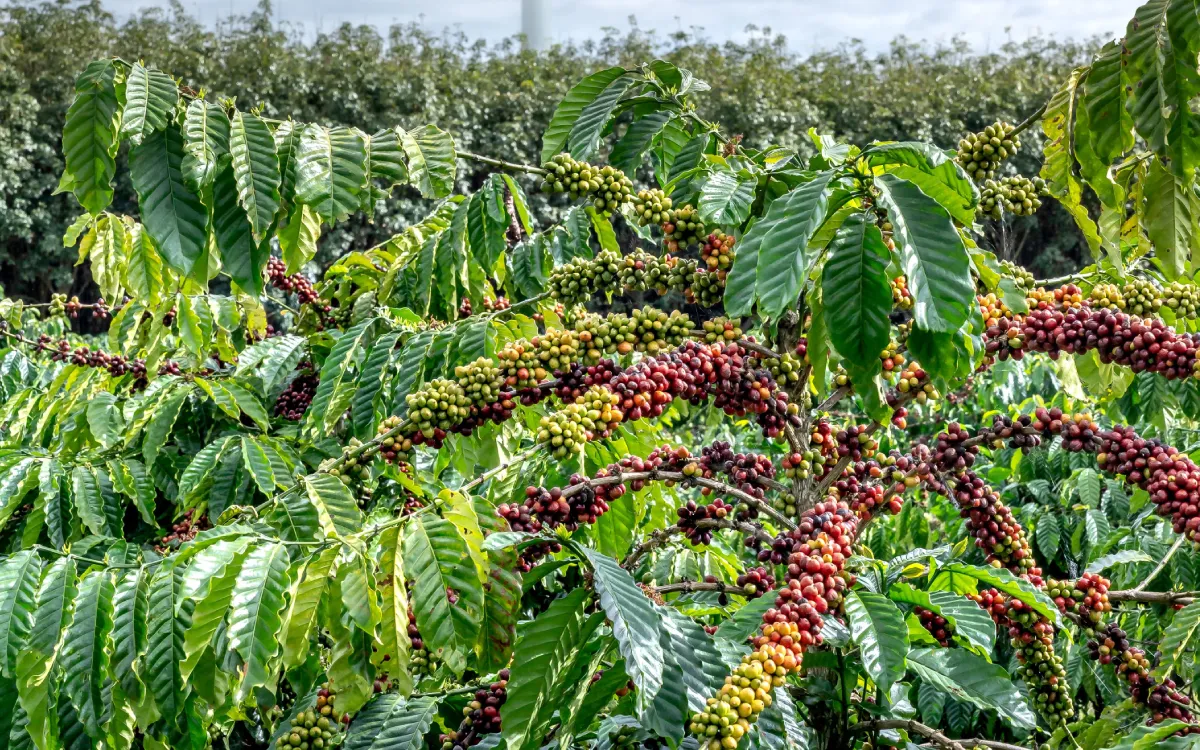
From the legendary SL28 and SL34 to disease-resistant hybrids like Ruiru 11 and Batian, Kenya’s coffee varieties tell a story of agricultural heritage, scientific innovation, and unparalleled cup quality.
At MAYTAC International Partners, we bridge the gap between local coffee producers and global buyers by leveraging our deep understanding of the Nairobi Coffee Exchange (NCE) and international market trends. Whether you are a roaster, importer, or coffee enthusiast, understanding Kenya’s coffee varieties is essential to appreciating what makes this origin truly extraordinary.
The Most Common Coffee Varieties in Kenya
Today, the Kenyan coffee landscape is dominated by five primary varieties: SL28, SL34, K7, Ruiru 11, and Batian. Each offers distinct characteristics in terms of flavour, yield, disease resistance, and growing requirements.
1. SL28 – The Crown Jewel of Kenyan Coffee
Developed in the early 1900s by Scott Agricultural Laboratories, SL28 is arguably Kenya’s most famous coffee variety. Selected from a drought-resistant variety in Tanganyika, SL28 is known for its exceptional cup quality featuring complex acidity, blackcurrant notes, and a wine-like finish.
Key characteristics:
- High-quality cup profile with intense fruitiness
- Bronze-tipped leaves (a distinguishing feature)
- Susceptible to Coffee Berry Disease (CBD) and Coffee Leaf Rust (CLR)
- Grown at elevations between 1,300–1,800 metres
SL28 remains the variety most sought after by specialty roasters worldwide, and it is a cornerstone of the Embu Arabica AA offered by MAYTAC International Partners.
2. SL34 – The Versatile Classic
Scott Agricultural Laboratories also developed SL34, and it shares a similar heritage with SL28. It originated from heirloom Bourbon stock known as “French Mission,” which was the primary coffee introduced to Kenya in the late 19th century.
Key characteristics:
- Bright, complex acidity with floral and fruity notes
- Adaptable to medium-to-high altitudes
- Susceptible to CBD and CLR
- Often blended with SL28 to create balanced cup profiles
SL34 is widely cultivated across Kenya’s eastern and central highlands, including the fertile slopes of Mount Kenya. It is a key component of MAYTAC’s Kenyan coffee sourcing portfolio.
3. K7 – Drought-Tolerant and Robust
K7 is another traditional variety developed in the 1930s. It is known for its drought tolerance and resistance to certain diseases, making it a reliable choice for farmers in less predictable climates.
Key characteristics:
- Liquor-like quality with balanced flavour
- More tolerant to drought than compact cultivars like Ruiru 11
- Resistant to some diseases
- Grown at moderate altitudes
While K7 may not command the same premium prices as SL28 or SL34, it remains an important variety for Kenya’s coffee industry due to its resilience and consistent yields.
4. Ruiru 11 – The Disease-Resistant Hybrid
Ruiru 11 is an F1 hybrid developed by the Coffee Research Foundation in Kenya. It was specifically bred for resistance to Coffee Berry Disease (CBD) and Coffee Leaf Rust (CLR)—two of the most devastating diseases affecting Arabica coffee.
Key characteristics:
- High resistance to CBD and CLR
- Compact growth habit
- Balanced flavour profile
- Early maturity and high yields
Ruiru 11 has become increasingly popular among Kenyan farmers because it reduces the need for inorganic chemicals while maintaining respectable cup quality. It is commonly found in Kenya’s Eastern Region coffee farms.
5. Batian – The New Generation Cultivar
Batian is a newer cultivar released by the Coffee Research Foundation as an improvement over Ruiru 11. Like Ruiru 11, it offers resistance to CBD and CLR, but it also features early maturity and improved cup quality.
Key characteristics:
- Resistant to CBD and CLR
- Early maturity
- High yields
- Improved flavour complexity compared to Ruiru 11
Batian is increasingly planted across Kenya as farmers seek varieties that combine disease resistance with the high cup quality that international buyers demand. It is one of the varieties featured in MAYTAC’s coffee collection.
6. Other Notable Varieties
While the five varieties above dominate Kenyan coffee production, a few others deserve mention:
- Blue Mountain: A variety introduced from Jamaica, known for its mild, balanced flavour. It is relatively rare in Kenya.
- Geisha: Originally from Ethiopia, Geisha is grown in small quantities in Kenya and is prized for its floral and jasmine-like aromatics.
- Kent: Another traditional variety, though less common than SL28 and SL34.
Kenyan Coffee Grades: Understanding the Quality Ladder
In addition to variety, coffee grading plays a crucial role in determining quality and price. The Kenya Coffee Exchange uses a physical screen-size classification system:
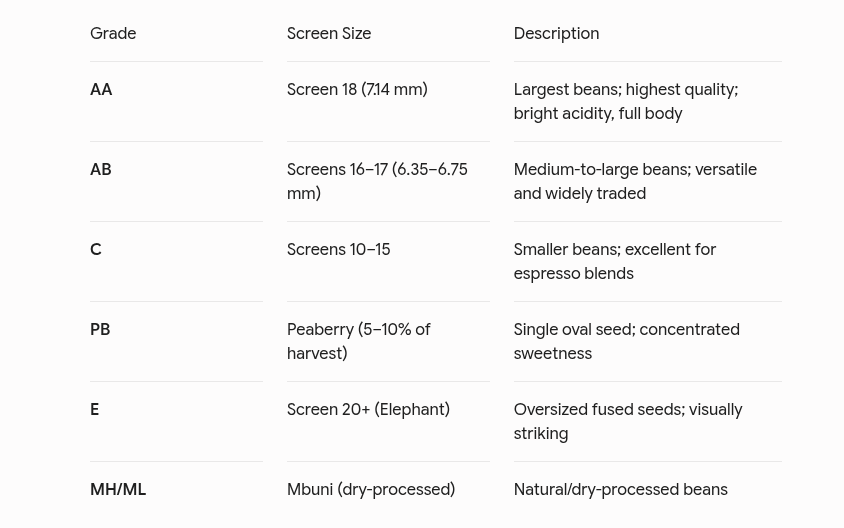
MAYTAC International Partners offers a full range of Kenyan coffee grades, from AA to PB, ensuring that buyers can find the perfect match for their roasting needs.
Why Kenyan Coffee Stands Out
Kenya’s coffee success is not accidental. It results from a combination of factors:
- High Altitudes: Grown between 1,500 and 2,000 metres above sea level, Kenyan coffee benefits from cool temperatures that slow bean development and enhance flavour complexity.
- Volcanic Soils: The fertile red volcanic soils of Mount Kenya and the Rift Valley provide exceptional nutrients.
- Meticulous Processing: Kenyan coffee is predominantly fully washed, with fermentation times of 12–24 hours and extended soaking for up to 24 hours to enhance cup clarity.
- Strict Quality Control: The Nairobi Coffee Exchange (NCE) serves as the sole central coffee auctioneer, where between 85% and 95% of Kenyan coffee is traded.
MAYTAC International Partners works closely with farmers, cooperatives, and millers to ensure consistency, traceability, and exceptional cup profiles that reflect Kenya’s rich coffee heritage.
Conclusion
From the legendary SL28 and SL34 to the disease-resistant Ruiru 11 and Batian, Kenya’s coffee varieties offer an extraordinary range of flavours and qualities. Whether you are seeking bright, fruity acidity or a balanced, approachable cup, Kenyan coffee delivers.
Explore Kenya’s finest coffee varieties with MAYTAC International Partners:
Contact MAYTAC International Partners today to source premium Kenyan coffee with full traceability and export-grade consistency.
- Email: info@maytacinternationalpartners.com
- Website: www.maytacinternationalpartners.com
- Phone: +254737 600 800
FAQs
FAQs will be added soon.