
The Rift Valley's Best-Kept Secret: Why Kericho Arabica AA Belongs on Your Menu
While Nyeri and Kirinyaga dominate headlines with intense phosphoric bite, Kericho County perched on the western rim of the Great Rift Valley produces one of Kenya's most balanced, versatile, and approachable specialty cups. Driven by volcanic soils, elevations up to 2,000 meters, and a double-washed processing tradition, Kericho Arabica AA combines premier Screen 17/18 physical density with structured malic acidity and rich stone fruit sweetness. For specialty roasters, adding Kericho AA unlocks exceptional roast control, reliable 81–88 SCA scores, and high-margin versatility across filter and espresso programs.
Western Highland Terroir: The Science Behind Kericho’s Profile
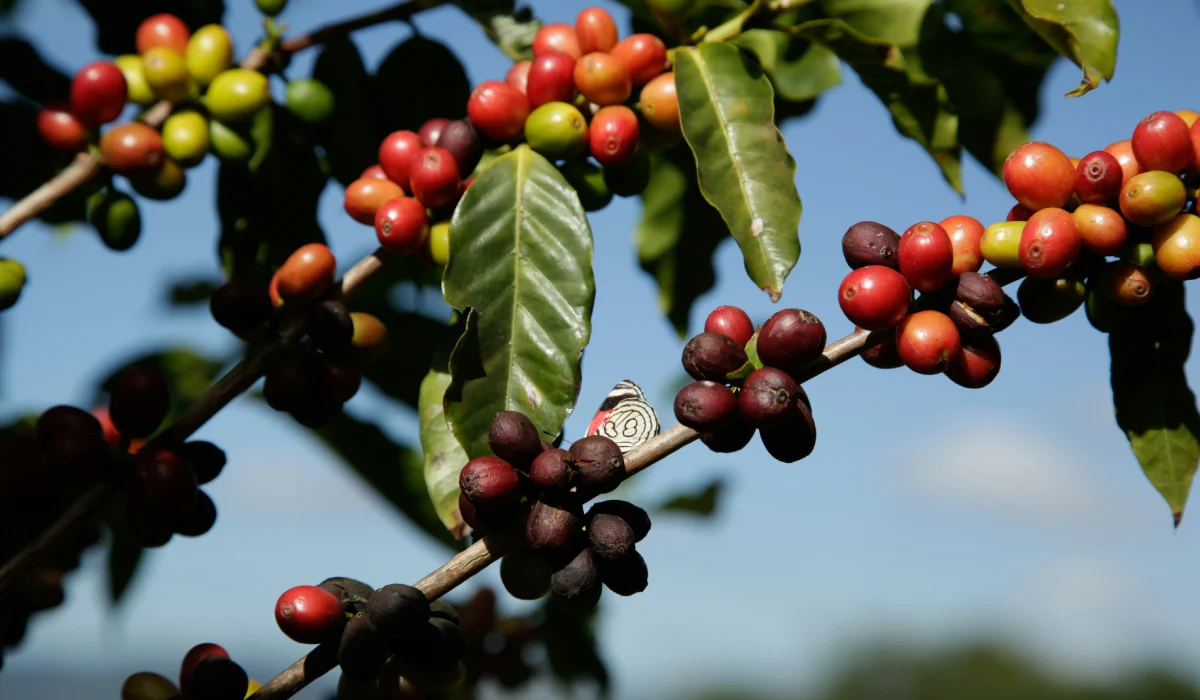
When green buyers consider Kenyan coffee, attention naturally gravitates toward the central highlands. However, traveling west across the Great Rift Valley reveals a distinct microclimate along the western rim. Kericho County features mineral-rich volcanic soils, consistent heavy rainfall, and high-altitude microclimates ranging between 1,600 and 2,000 meters above sea level.
These cool highland temperatures slow the coffee cherry's maturation cycle. This extended development window forces the seed to absorb essential minerals while synthesizing complex sugars and organic acids.
+-------------------------------------------------------------------+
|               TERROIR COMPARISON: CENTRAL VS. WESTERN             |
+-------------------------------------------------------------------+
       |                                       |
       v                                       v
+-----------------------+               +-----------------------+
|  CENTRAL HIGHLANDS    |               |  KERIHO (WESTERN)     |
|  (Nyeri / Kirinyaga)  |               |  (Rift Valley Rim)    |
| Intense Phosphoric    |               | Soft Malic Acidity    |
| Explosive Blackcurrant|               | Creamy Stone Fruit    |
| Sharp, High Acidity   |               | Round, Balanced Body  |
+-----------------------+               +-----------------------+
While Nyeri and Kirinyaga are famous for intense, sharp phosphoric acidity, Kericho Arabica AA introduces a softer, rounder malic acidity paired with Meyer lemon, red plum, and a remarkably creamy mouthfeel. It retains high-altitude density while offering a balanced structure for single-origin offerings and blend integration.
Grade AA Physical Standards and Cultivar Breakdown
Under official regulations set by the Coffee Directorate of Kenya, "AA" denotes the highest physical screen sizing tier. Kericho Arabica AA is mechanically sorted using precision Screens 17 and 18 (7.14mm+ mesh), yielding a bold, uniform lot footprint.
+-------------------------------------------------------------------+
|                  KERICHO ARABICA AA CULTIVAR MATRIX                 |
+-------------------------------------------------------------------+
       |                    |                    |
       v                    v                    v
+--------------+     +--------------+     +--------------+
|    SL-28     |     |    SL-34     |     | BATIAN /     |
| Bourbon line |     | High-rainfall|     | RUIRU 11     |
| Fruit clarity|     | Heavy body   |     | Disease-res. |
| Blackcurrant |     | Floral aroma |     | Density/Yield|
+--------------+     +--------------+     +--------------+
-
SL-28: Bourbon-lineage variety providing bright fruit clarity, citric structure, and iconic berry undertones.
-
SL-34: Thrives in high-rainfall highland zones, contributing heavy body, sweet citrus, and complex aromatics.
-
Batian & Ruiru 11: Modern disease-resistant varieties developed by the Coffee Research Institute (CRI) that protect against Coffee Berry Disease (CBD) while preserving high physical density and cup scores matching heritage cultivars.
Post-Harvest Processing & Technical Specifications
The sensory clarity of Kericho Arabica AA is built upon Kenya's traditional fully washed double-fermentation method.
1.Selective Harvesting & Pulping:
Smallholder farmers hand-pick peak-ripe red cherries and deliver them on the same day to cooperative wet mills for mechanical disc pulping.
2.Double Fermentation Cycle:
Pulped parchment undergoes primary dry fermentation for 24 to 36 hours to break down mucilage layers. After channel washing and density sorting, it moves into a secondary fermentation cycle to strip lingering micro-mucilage.
3.Clean Water Soak Phase:
The parchment is completely submerged in fresh mountain water channels for 16 to 24 hours, stabilizing seed hydration and halting microbial fermentation before sun-drying.
4.Raised Bed Sun-Drying:
Parchment dries on elevated African tables for 7 to 21 days under active monitoring until reaching a stable export moisture content of 10.5% to 11.5%.
Technical Specifications and Sensory Profile
| Parameter | Specification |
| Origin / Region | Kenya, Kericho County (The Great Rift Valley) |
| Altitude Range | 1,600m – 2,000m Above Sea Level |
| Grade / Screen | Coffee Grade AA (Screen 17/18) |
| Moisture Content | 10.5% – 11.5% |
| Botanical Varieties | SL-28, SL-34, Batian, Ruiru 11 |
| Processing Method | Traditional Fully Washed (Double Fermentation) |
| SCA Cupping Score | 81.00 – 88.00 Points |
| Key Flavor Notes | Meyer Lemon, Blackberry, Red Plum, Milk Chocolate, Cane Sugar |
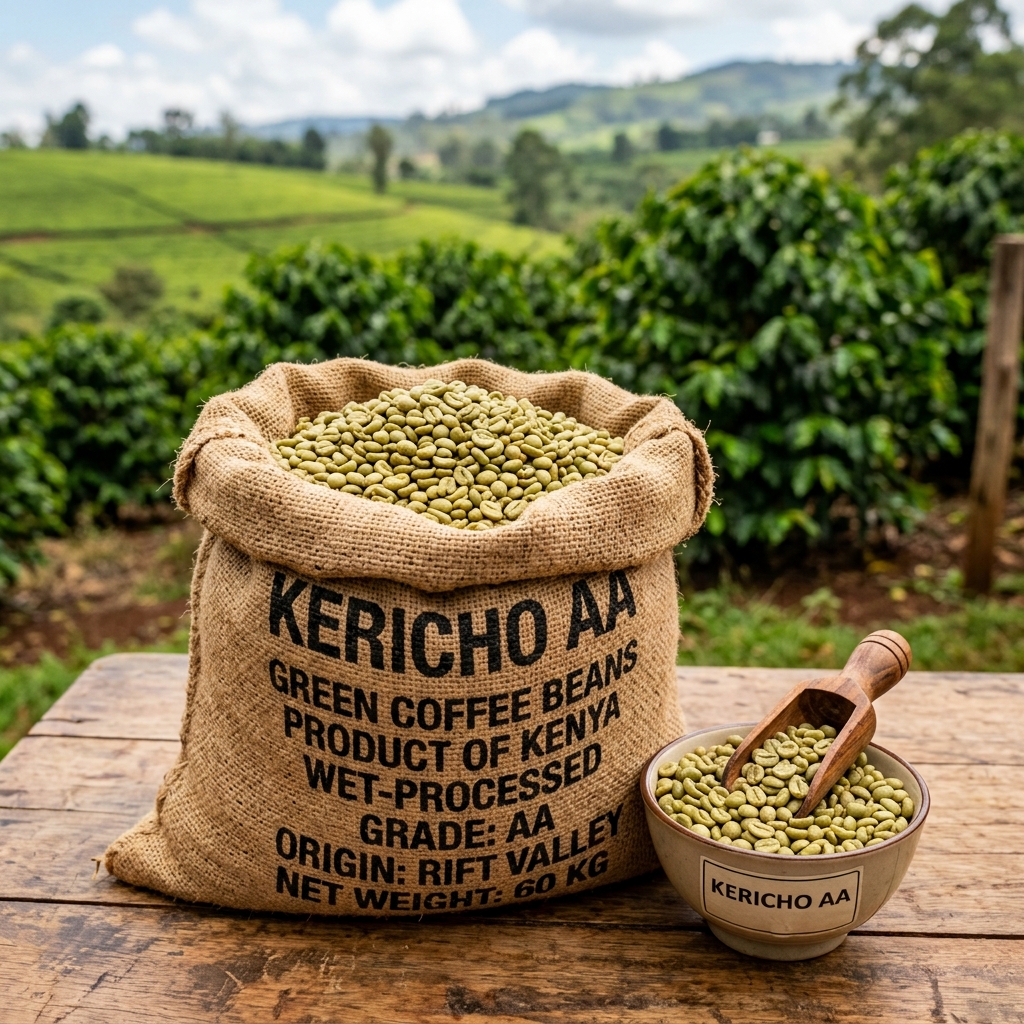
| Wholesale Export Pricing | USD 8.90 / Kg (60 Kg GrainPro Jute Bags, Minimum Order 100 Kg) |
Roasting Performance and Menu Integration
-
Light to Medium Roasts: Highlight crisp malic acidity, floral jasmine aromatics, and bright fruit notes of blackberry, red plum, and Meyer lemon. Ideal for premium single-origin filter menus.
-
Medium to Dark Roasts: Unlock a heavier, velvety mouthfeel accompanied by dark chocolate, brown sugar sweetness, and subtle herbal tea complexity—making it an exceptional single-origin espresso or a luxury acidity-builder in commercial blends.
Ethical Direct Sourcing with Maytac International Partners
At Maytac International Partners Limited, we build direct-trade partnerships with smallholder farmer cooperatives across Kericho County. By prioritizing ethical supply chain management, fair producer pricing, and complete physical traceability from farm to port, we ensure reliable, sustainable outcomes for our global roasting partners.
Our 6-Step Export Pipeline
-
Inquiry & Consultation: Reach out with your volume requirements and target profile specs.
-
Transparent Quotation: Receive a direct, competitive FOB or CIF quote tailored to your lot size.
-
Sample Dispatch: Evaluate an official green or roasted sample lot in your laboratory.
-
Cupping Approval: Confirm physical screen metrics, moisture levels, and SCA cup scores.
-
Contract Confirmation: Approve your order parameters for export reservation.
-
Logistics & Dispatch: We manage customs clearance, phytosanitary documentation, and ocean freight execution.
Direct Contact & Sample Requests
-
Email: info@maytacinternationalpartners.com
-
Website: www.maytacinternationalpartners.com
-
Phone / WhatsApp: +254 737 600 800
Related Products
FAQs
How does Kericho Arabica AA differ from Nyeri or Kirinyaga
Kericho coffee is grown along the western rim of the Great Rift Valley, yielding a softer, rounder malic acidity, rich stone fruit flavors, and a creamier body compared to the sharper, highly phosphoric, and intensely dark-berry profile typical of central origins like Nyeri.
What are the roasting benefits of Kericho AA's Screen 17/18 size and high density?
The uniform Screen 17/18 size and high high-altitude cellular density allow Kericho AA green coffee to absorb thermal energy predictably. Roasters can apply higher initial heat charges without risking surface scorching or underdeveloped bean centers.
What packaging is used to protect green coffee freshness during ocean transit?
All export lots are packed in 60 kg food-grade GrainPro hermetic bags enclosed in traditional jute sacks. This dual packaging preserves internal moisture levels (10.5%–12.0%) and protects against humidity variations during sea freight.
Can Kericho Arabica AA be used in espresso blends?
Yes. Thanks to its rich sweetness, creamy mouthfeel, and balanced malic acidity, Kericho AA performs exceptionally well both as a single-origin specialty espresso and as a flavor-enhancing component in high-end commercial blends.
What is the minimum order quantity for requesting export quotes or samples?
Sample evaluation lots are available upon request for commercial buyers. Bulk export contracts start at a minimum order quantity of 1000 kg, packaged in standard 60 kg GrainPro jute bags.