
Coffee Grade
Coffee Grade C
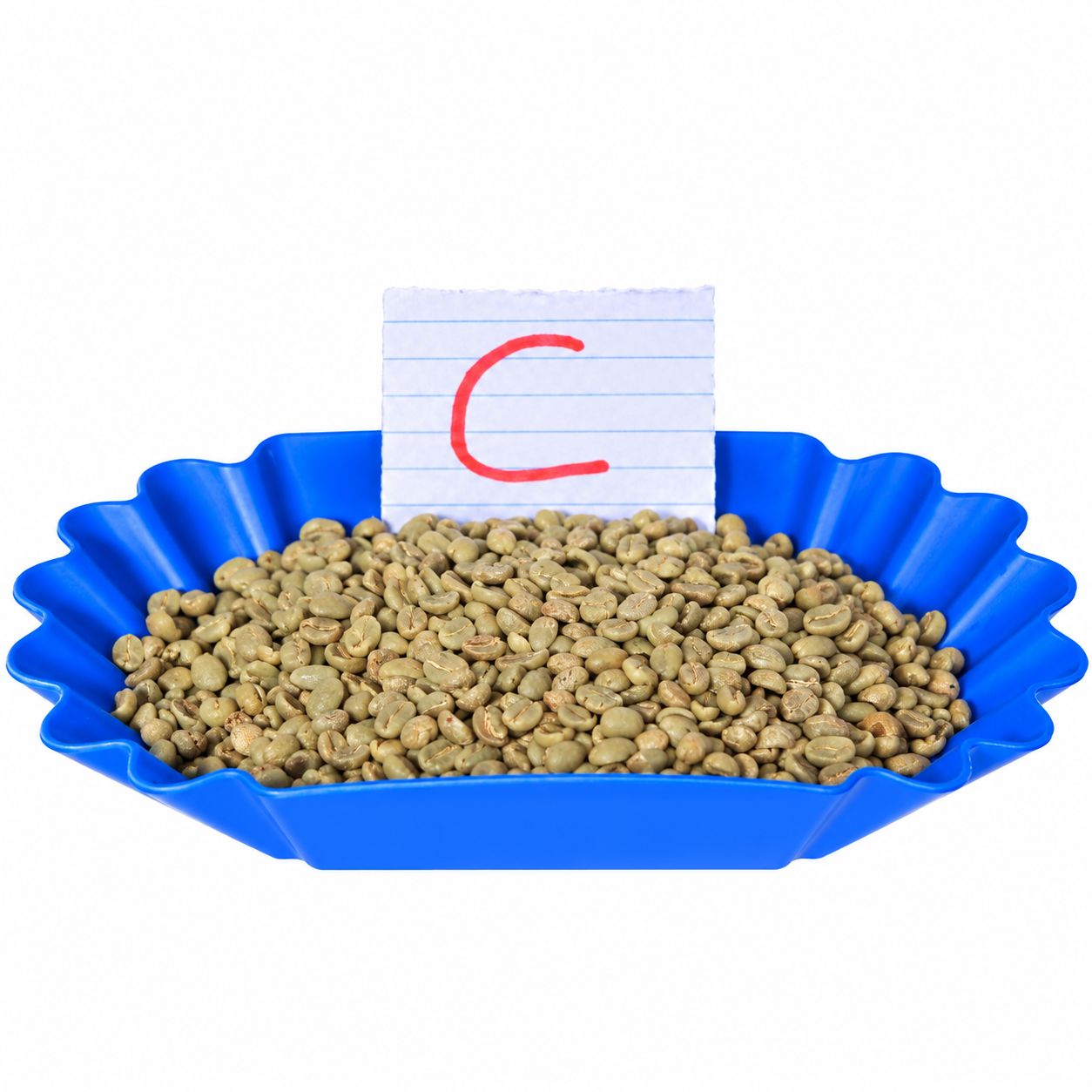
Coffee Grade C represents the smaller physical size spectrum of washed green coffee beans separated during dry mill processing. Classified primarily by screen size—typically passing through Screen 15 and retained on Screens 10 through 14—Grade C consists of smaller, lighter beans that do not meet the strict screen dimensions of Grades AA or AB. Despite their smaller physical stature, Grade C beans originate from the exact same high-altitude trees, fertile soils, and meticulous wet-milling processes as their larger counterparts.
Products
7
Regions
3
Positioning
Premium Quality
Coffee Grade
Coffee Grade C
Coffee Grade C represents the smaller physical size spectrum of washed green coffee beans separated during dry mill processing. Classified primarily by screen size—typically passing through Screen 15 and retained on Screens 10 through 14—Grade C consists of smaller, lighter beans that do not meet the strict screen dimensions of Grades AA or AB. Despite their smaller physical stature, Grade C beans originate from the exact same high-altitude trees, fertile soils, and meticulous wet-milling processes as their larger counterparts.
Grade Story
While they exhibit slightly lower density and lighter body in the cup, Grade C offers a clean, pleasant flavor profile at a significantly lower cost. This makes Grade C an essential, economical ingredient for commercial coffee roasters, value-focused brands, local consumption markets, and cost-effective espresso blending strategies.
Coffee Grade C occupies a crucial functional space in global coffee supply chains, providing an accessible bridge between high-priced specialty lots and commercial budget markets. Prominently featured in East African grading classifications—such as those used in Kenya, Tanzania, and Uganda—Grade C represents the smaller, lighter green coffee seeds harvested during each crop cycle.
While size grading separates these beans from top-tier auction lots, Grade C remains a clean, fully processed product that yields remarkable value for commercial roasters, institutional suppliers, and domestic coffee markets.
Physical Characteristics and Screen Sorting
During dry milling, green coffee undergoes rigorous mechanical screening to segregate beans by physical dimensions and weight. Grade C beans are defined by their smaller screen sizes, generally falling below Screen 15 (15/64ths of an inch or ~5.95 mm) down to Screen 10 (10/64ths of an inch or ~3.96 mm).
Because Grade C beans are smaller and slightly less dense than Grade AA or AB beans, dry mills utilize gravity tables and pneumatic air separators to remove husks, broken chips, or foreign matter. This ensures that while the beans are physically smaller, the overall lot maintains clean physical purity and low defect counts. Coffee roasters seeking to align their quality control protocols with international green coffee grading standards can review guidelines set by the Specialty Coffee Association (SCA).
Cupping Dynamics and Flavor Expectations
A common misconception in coffee trade is that smaller beans lack flavor. In reality, Grade C beans grow on the exact same branches and undergo the exact same fermentation and washing cycles as Grade AA beans. However, because smaller beans mature at a different rate or develop on the outer ends of branches, their physical density and sugar accumulation are slightly different.
When cupped by industry professionals, Grade C coffee typically yields:
-
Milder Acidity: A gentler, softer acidity profile compared to the sharp, intense citrus notes of Grade AA.
-
Lighter Body: A clean, easy-drinking mouthfeel with delicate, tea-like body.
-
Balanced Flavor Notes: Subtle sweetness accompanied by sweet herbal, mild nutty, soft stone fruit, or cocoa nuances.
-
Clean Finish: A crisp finish free from off-flavors, provided the green coffee was properly washed and dried.
Market supply dynamics, yield proportions, and export statistics across various screen sizes are regularly tracked by international organizations such as the International Coffee Organization (ICO).
Commercial Value and Application
At regional trading hubs, including the Nairobi Coffee Exchange, Grade C beans sell at a noticeable discount compared to Screen 16–18 grades. This favorable pricing structure makes Grade C immensely popular for specific commercial applications:
-
Commercial and Value Blends: Grade C provides an economical base for high-volume retail coffees, drip filter blends, and institutional food service products where price sensitivity is critical.
-
Espresso Formulation: Roasters use Grade C as a clean filler in espresso blends, allowing them to balance margins while relying on small portions of Grade AA or PB to supply top-note aromatics.
-
Domestic and Regional Consumption: Grade C is a major driver of regional coffee economies, serving as a staple supply for local roasting houses, hotel chains, and domestic consumption across producing nations.
By delivering genuine origin characteristics at an affordable price point, Coffee Grade C plays an indispensable role in maintaining the economic stability of coffee producers and commercial roasters alike.
Products
Products Under This Grade
Connect the grade standard directly to live products so buyers can move from qualification to action without friction.
Eastern Region
Embu Arabica C
USD 7.70
Open product details and inquiry options.
Kenya Rift Valley Coffee
Kericho Arabica C
USD 7.70
Open product details and inquiry options.
Central Region
Kiambu Arabica C
USD 7.90
Open product details and inquiry options.
Central Region
Kirinyaga Arabica C
USD 7.70
Open product details and inquiry options.
Eastern Region
Meru Arabica C
USD 7.70
Open product details and inquiry options.
Central Region
Murang'a Arabica C
USD 7.70
Open product details and inquiry options.
Central Region
Nyeri Arabica C
USD 7.90
Open product details and inquiry options.
FAQs
Use FAQs to answer qualification questions early and reduce hesitation before inquiry.
What size are Coffee Grade C beans?
Coffee Grade C beans are smaller green coffee seeds that typically pass through Screen 15 perforations (5.95 mm) and are retained on screens ranging from Screen 10 to Screen 14 (3.96 mm to 5.55 mm).
Does Grade C coffee contain lower-quality or defective beans?
No. Grade C refers specifically to physical bean size, not to defect count. While it represents smaller beans, proper milling ensures that defective, damaged, or black beans are removed, resulting in a clean, sound green coffee lot.
How does Grade C compare to Grade AA and AB in taste?
Grade C generally has a milder acidity, a lighter body, and a more delicate flavor profile compared to the intense, complex, and heavy-bodied cup produced by Grade AA or AB beans. However, it still retains clean origin flavor characteristics.
Why is Grade C popular among commercial coffee roasters?
Grade C is significantly less expensive than Grade AA or AB while originating from the same high-altitude origins. Its lower cost allows commercial roasters to lower production costs for high-volume blends without sacrificing cleanliness or cup quality.
How should coffee roasters roast Grade C green beans?
Because Grade C beans are smaller and slightly less dense, they absorb heat rapidly during roasting. Roasters should lower their charge temperature and monitor the roast application carefully during the first crack to prevent scorching or over-roasting.