
Coffee Grade
Coffee Grade AB
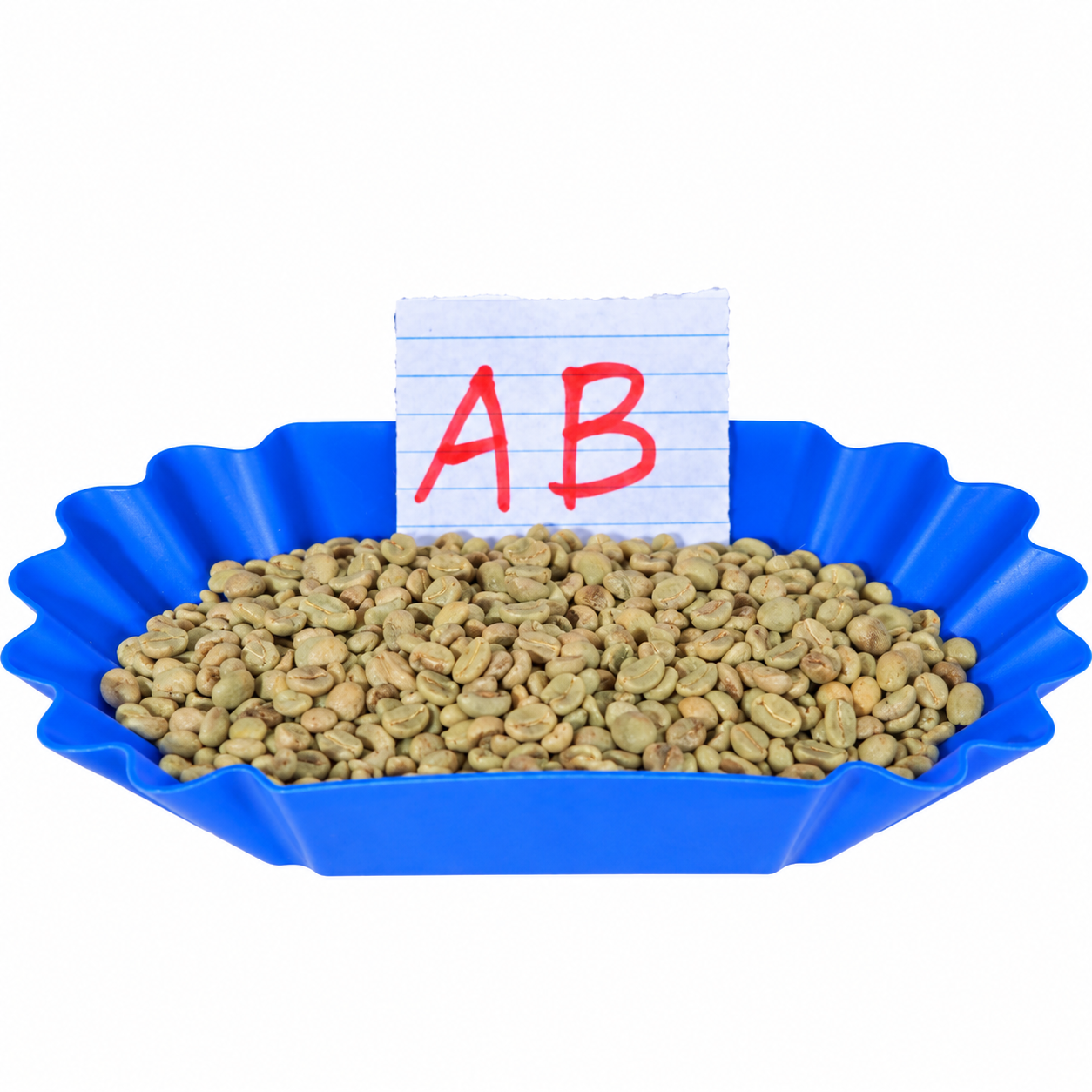
Coffee Grade AB represents one of the most versatile, reliable, and widely traded green coffee classifications in the specialty coffee industry. Formed by combining screen sizes 16 and 17, Grade AB coffee consists of medium-to-large beans retained between 6.35 mm and 6.75 mm mesh sizes. Originating primarily from renowned East African coffee-producing regions like Kenya and Tanzania, this grade strikes an exceptional balance between high physical quality and commercial availability.
Products
7
Regions
3
Positioning
Premium Quality
Coffee Grade
Coffee Grade AB
Coffee Grade AB represents one of the most versatile, reliable, and widely traded green coffee classifications in the specialty coffee industry. Formed by combining screen sizes 16 and 17, Grade AB coffee consists of medium-to-large beans retained between 6.35 mm and 6.75 mm mesh sizes. Originating primarily from renowned East African coffee-producing regions like Kenya and Tanzania, this grade strikes an exceptional balance between high physical quality and commercial availability.
Grade Story
While slightly smaller than Grade AA, Grade AB beans undergo the exact same rigorous washing and sun-drying processes, delivering bright acidity, rich aromatic profiles, and a balanced body in the cup. Because it combines premium sensory characteristics with consistent yield volumes, Grade AB is a mainstay at coffee auctions, serving as a staple choice for specialty roasters, commercial exporters, and single-origin or espresso blending formulations worldwide.
Coffee Grade AB holds a vital position in global coffee commerce as the industry’s most dependable workhorse grade. Predominantly used in East African coffee grading systems—most notably across Kenya, Tanzania, and Uganda—this designation represents a combination of two distinct screen sizes: Screen 16 and Screen 17. By bridging the gap between elite, maximum-size beans (Grade AA) and smaller utility grades, Grade AB provides coffee roasters and importers with an exceptional balance of complex flavor, high physical density, and competitive pricing.
Sizing Standards and Physical Composition
The classification of Grade AB relies on precise mechanical screen sorting during green coffee processing at dry mills. To earn the Grade AB designation, green coffee beans must pass through a Screen 17 mesh (17/64ths of an inch, or ~6.75 mm) and be retained above a Screen 16 mesh (16/64ths of an inch, or ~6.35 mm).
Because Grade AB is a blend of these two adjacent screen sizes, dry mills utilize calibrated gravity separators and optical sorting machinery to maintain physical uniformity. This careful grading ensures that the physical density across the lot remains consistent. Uniformity in density and moisture content is crucial during thermal transfer, allowing specialty coffee roasters to achieve predictable roast progression without risking uneven bean coloration or tipping. To understand official screen sizing frameworks and physical bean defect parameters, roasters can consult the green coffee standards established by the Specialty Coffee Association (SCA).
Cupping Profile and Flavor Characteristics
Sensory professionals often note that Grade AB coffee displays a flavor profile that rivals Grade AA. Because Grade AB beans come from the exact same trees, microclimates, and washing channels as larger beans, they absorb identical terroir characteristics during cultivation. Depending on the specific growing region and altitude, Grade AB coffees typically feature:
-
Vibrant Acidity: Clean, crisp citric and malic acidity reminiscent of green apples, red berries, and juicy citrus fruits.
-
Balanced Sweetness: Deep caramel, cane sugar, and honey-like sweetness that stabilizes the cup.
-
Complex Aromatics: Floral overtones, black tea nuances, and spicy or fruity aromatics.
-
Smooth Body: A round, velvety mouthfeel that acts as an excellent foundation for both filter coffee and espresso extraction.
When grown at high elevations—often exceeding 1,600 meters above sea level—these beans develop high physical hardness, preserving volatile aromatic compounds during transport and storage. Global trade conditions and crop yield distributions for various grades are routinely documented by international bodies like the International Coffee Organization (ICO).
Commercial Significance and Blending Versatility
At regional trade centers, including the Nairobi Coffee Exchange, Grade AB accounts for a substantial percentage of the total traded volume in any given harvest season. Because trees produce a larger volume of Screen 16 and 17 beans compared to Screen 18, Grade AB offers consistent supply availability for international coffee traders.
For specialty coffee roasters, Grade AB serves two primary functions:
-
Single-Origin Offerings: High-scoring Grade AB lots regularly perform exceptionally on cupping tables, making them outstanding standalone single-origin filter coffees.
-
Premium Blending: Thanks to its vibrant acidity and solid body, Grade AB is heavily utilized in high-end espresso blends to inject fruit brightness, aromatic lift, and complexity into darker or milk-based beverages.
By combining superior cup quality, high volume availability, and accessible auction pricing, Coffee Grade AB remains an essential benchmark in the global specialty coffee trade.
Products
Products Under This Grade
Connect the grade standard directly to live products so buyers can move from qualification to action without friction.
Eastern Region
Embu Arabica AB
USD 8.00
Open product details and inquiry options.
Kenya Rift Valley Coffee
Kericho Arabica AB
USD 8.00
Open product details and inquiry options.
Central Region
Kiambu Arabica AB
USD 8.50
Open product details and inquiry options.
Central Region
Kirinyaga Arabica AB
USD 8.50
Open product details and inquiry options.
Eastern Region
Meru Arabica AB
USD 8.40
Open product details and inquiry options.
Central Region
Murang'a Arabica AB
USD 8.00
Open product details and inquiry options.
Central Region
Nyeri Arabica AB
USD 8.50
Open product details and inquiry options.
FAQs
Use FAQs to answer qualification questions early and reduce hesitation before inquiry.
What screen sizes make up Coffee Grade AB?
Coffee Grade AB is a combination of Screen 16 (16/64ths of an inch or 6.35 mm) and Screen 17 (17/64ths of an inch or 6.75 mm) green coffee beans.
How does Coffee Grade AB differ from Grade AA?
The primary difference is physical size. Grade AA consists solely of Screen 18 (7.14 mm) beans, whereas Grade AB is composed of Screen 16 and 17 beans. In terms of cup quality, Grade AB often shares similar vibrant flavor notes and high acidity with Grade AA, but is available in larger quantities at slightly lower price points.
Is Grade AB suitable for single-origin roasting?
Yes. High-scoring Grade AB lots frequently exhibit outstanding cup profiles with rich sweetness, bright fruit notes, and complex aromatics, making them popular choices for single-origin filter coffee offerings.
Why is Grade AB widely used in coffee blends?
Grade AB provides an ideal combination of consistent density, strong body, and lively acidity. Its steady supply volume and balanced profile allow roasters to add bright high notes and structural depth to espresso blends without high cost volatility.
Does smaller bean size in Grade AB mean lower coffee quality?
Not necessarily. While size classification separates beans physically, cup quality is determined by altitude, terroir, picking precision, and post-harvest washing. A meticulously processed Grade AB coffee from high-altitude farms can easily outscore an average Grade AA coffee on the cupping table.