
Coffee Grade
Coffee Grade PB (Peaberry)
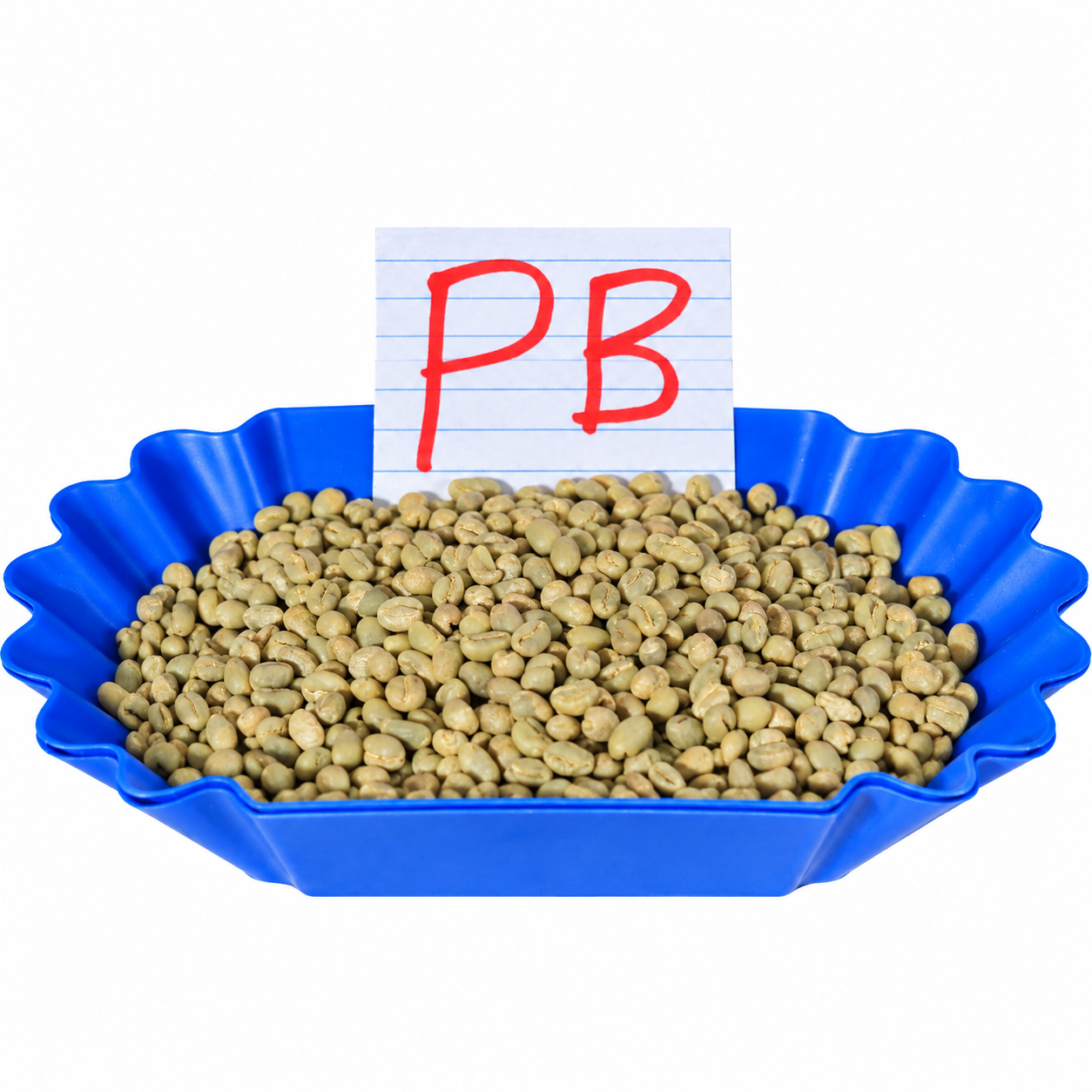
Coffee Grade PB, commonly known as Peaberry, is a unique natural variation where a single oval or round seed develops inside the coffee cherry instead of the typical two flat-sided beans. Occurring in roughly 5% to 10% of any coffee harvest, Peaberry beans are meticulously sorted using specialized screen separators at dry mills.
Products
7
Regions
3
Positioning
Premium Quality
Coffee Grade
Coffee Grade PB (Peaberry)
Coffee Grade PB, commonly known as Peaberry, is a unique natural variation where a single oval or round seed develops inside the coffee cherry instead of the typical two flat-sided beans. Occurring in roughly 5% to 10% of any coffee harvest, Peaberry beans are meticulously sorted using specialized screen separators at dry mills.
Grade Story
Because the coffee tree concentrates all its nutrients, sugars, and organic compounds into one single seed rather than splitting them between two, Grade PB is widely celebrated for its intensified flavor profile, elevated sweetness, bright acidity, and complex aromatics. These compact, spherical green coffee beans roast with exceptional heat distribution due to their smooth, seamless shape. Highly sought after by specialty roasters and coffee connoisseurs, Grade PB commands top prices at auctions and serves as a standout offering for premium single-origin pour-overs and espresso releases.
Coffee Grade PB, widely known throughout the specialty coffee industry as Peaberry, represents one of nature’s most fascinating botanical phenomena. Under normal growth conditions, a flowering coffee cherry develops two distinct seeds that grow facing each other, creating the familiar flat-sided coffee bean shape. However, in approximately 5% to 10% of coffee cherries worldwide, a natural mutation or fertilization anomaly occurs where only one seed is fertilized. That lone seed expands to fill the entire inner chamber of the fruit, developing into a smooth, oval, or round bean known as a Peaberry.
Botanical Origin and Physical Separation
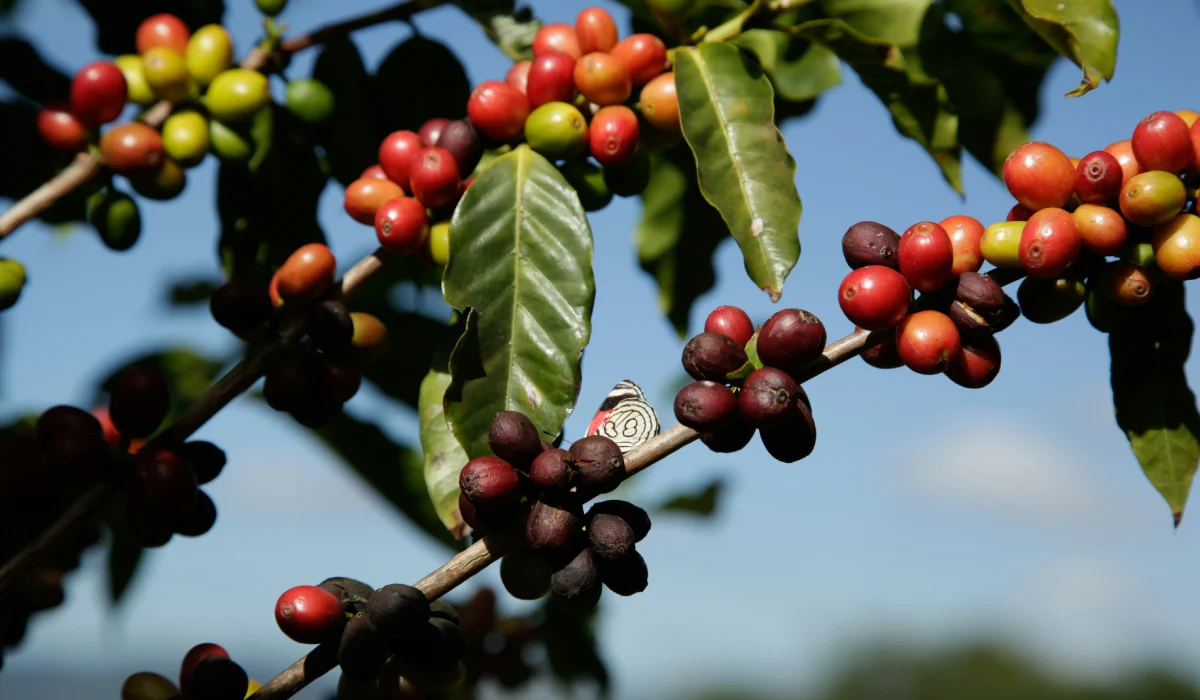
Because Peaberry cherries look identical to standard coffee cherries on the tree, they cannot be identified during harvesting. Instead, Grade PB beans are separated during the dry milling process after the coffee cherries have been pulped, washed, and dried. Dry mills utilize specialized mechanical sieves with slotted, oblong perforations rather than round screen holes. These screens allow the small, cylindrical Peaberry beans to fall through while retaining standard flat-sided beans.
Physically, Grade PB green coffee beans are compact, dense, and spherical. This unique geometry offers a distinct mechanical advantage during the roasting process. Standard flat beans have sharp edges and flat faces that require careful thermal management to avoid scorching or "tipping." In contrast, the seamless, rounded shape of Peaberry beans allows them to roll smoothly across the roast drum, absorbing conductive and convective heat uniformly. To review green coffee physical classification and defect guidelines, roasters can refer to standards maintained by the Specialty Coffee Association (SCA).
Sensory Profile and Cup Characteristics
The popular belief that Peaberries deliver a richer, more concentrated flavor profile is strongly supported by coffee chemistry. Because the single seed does not share space or nutrients with a twin, it absorbs the entirety of the sugars, lipids, and organic acids produced by the parent tree.
While sensory attributes depend heavily on growing region, soil composition, and altitude, high-grade PB lots—particularly from East African origins like Kenya and Tanzania—exhibit exceptional cupping qualities:
-
Intense Flavor Concentration: A pronounced flavor clarity with heightened notes of juicy stone fruit, blackcurrant, citrus zest, and tropical fruits.
-
Vibrant and Bright Acidity: Crisp, wine-like malic and citric acidity that gives the cup a refreshing, lively structure.
-
Enhanced Sweetness: A high concentration of natural sugars that caramelizes deeply during roasting, producing notes of honey, dark sugar, and butterscotch.
-
Aromatic Lift: Vibrant floral bouquet and delicate herbal aromas that fill the room during extraction.
Global production volume and trade logistics surrounding specialty grades like Peaberry are frequently monitored by trade authorities like the International Coffee Organization (ICO).
Market Demand and Specialty Value
At regional trading hubs, such as the Nairobi Coffee Exchange, Grade PB lots regularly spark fierce bidding wars among international buyers. Because Peaberries account for only a small fraction of a farm’s overall yield, their relative scarcity adds an element of exclusivity that appeals to high-end coffee roasters and consumer markets in Japan, Europe, and North America.
Grade PB is rarely blended into commercial products. Instead, specialty roasters showcase Peaberry coffees as standalone single-origin offerings, limited-edition micro-lots, or flagship filter options. Their combination of physical beauty, captivating origin story, uniform roast dynamics, and vibrant cup quality ensures that Coffee Grade PB remains a permanent favorite among coffee enthusiasts worldwide.
Products
Products Under This Grade
Connect the grade standard directly to live products so buyers can move from qualification to action without friction.
Eastern Region
Embu Arabica PB
USD 7.80
Open product details and inquiry options.
Kenya Rift Valley Coffee
Kericho Arabica PB
USD 7.80
Open product details and inquiry options.
Central Region
Kiambu Arabica PB
USD 8.20
Open product details and inquiry options.
Central Region
Kirinyaga Arabica PB
USD 8.00
Open product details and inquiry options.
Eastern Region
Meru Arabica PB
USD 7.90
Open product details and inquiry options.
Central Region
Murang'a Arabica PB
USD 7.80
Open product details and inquiry options.
Central Region
Nyeri Arabica PB
USD 8.20
Open product details and inquiry options.
FAQs
Use FAQs to answer qualification questions early and reduce hesitation before inquiry.
What makes a Peaberry coffee bean round?
A Peaberry forms when only one of the two ovules inside a coffee cherry is fertilized during pollination. Without a twin bean pressing against it to create a flat side, the single seed grows freely into a small, rounded, oval shape that fills the entire fruit.
Does Peaberry coffee taste different from standard coffee from the same tree?
Yes. Because the single Peaberry seed absorbs all the nutrients and sugars that would normally be divided between two beans, it often exhibits higher flavor concentration, sweeter notes, brighter acidity, and a slightly denser body than standard flat beans harvested from the exact same plant.
Why do Peaberry beans roast more evenly?
Peaberry beans are smooth and round with no flat sides or sharp edges. When roasted in a drum, they roll easily, allowing heat to transfer smoothly across the entire surface of the bean, reducing the risk of uneven roasting or surface scorching.
Are Peaberry beans rare?
Peaberries represent approximately 5% to 10% of any given coffee harvest. Because separating them requires dedicated mechanical sorting machinery at dry mills, their relative rarity and sorting labor contribute to higher market prices.
How should roasters adjust their approach for Grade PB green coffee?
Because Peaberry beans are smaller and physically denser than standard green coffee, they require careful thermal application. Roasters often use a slightly lower charge temperature or adjusted airflow to allow heat to reach the dense center of the round bean without burning the outer skin.